Case library

Proof, with the reasoning attached.

Every case records what we planned, what changed, and what we would do differently. The one we turned down is in here too, because that decision was the useful part.

Documented decisionsHonest revisionsUpdated monthly
Selected work

Thirteen worked examples, start to finish.

Worked examples of how each case type is planned and documented. The illustrations are schematic representations of the workflow, not clinical records.

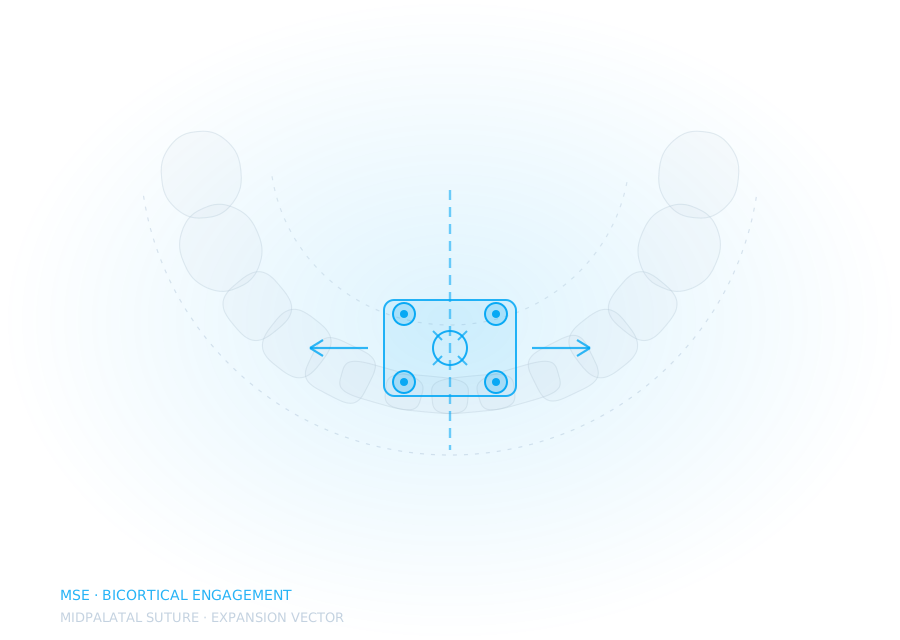
Skeletal MSE in a 24-year-old, suture opened

MSE in a 24-year-old, suture opened

Bicortical screw placement planned on CBCT after the first plan showed insufficient palatal bone posteriorly. Screws moved 4mm anterior; suture split at day nine. How we run this case type →
MSEBicorticalCBCT-planned
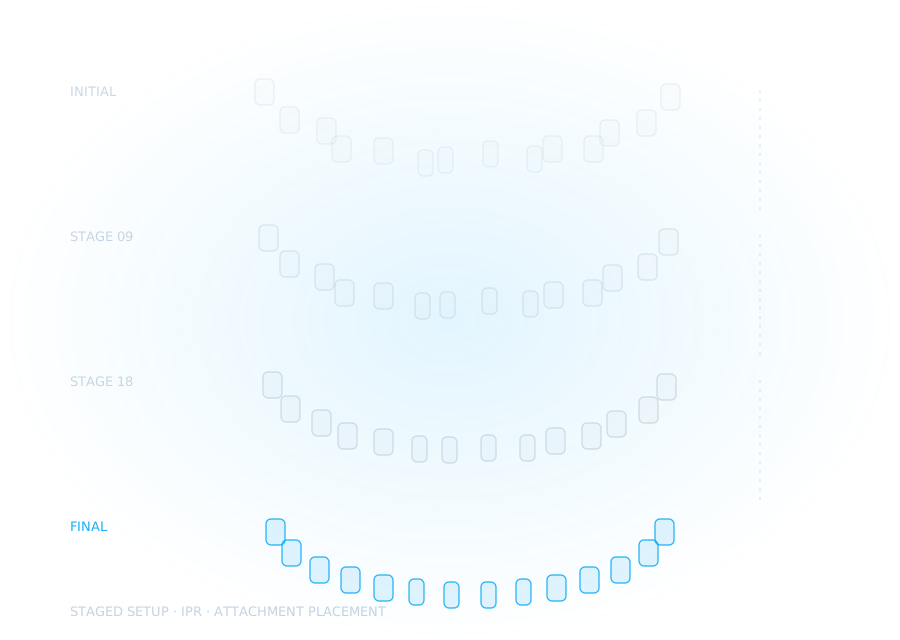
Aligner Non-extraction crowding, 6mm lower

Non-extraction crowding, 6mm lower

IPR distributed across phases rather than front-loaded, so the posterior segment held without a TAD. How we run this case type →

Staged setupIPR plan3 days
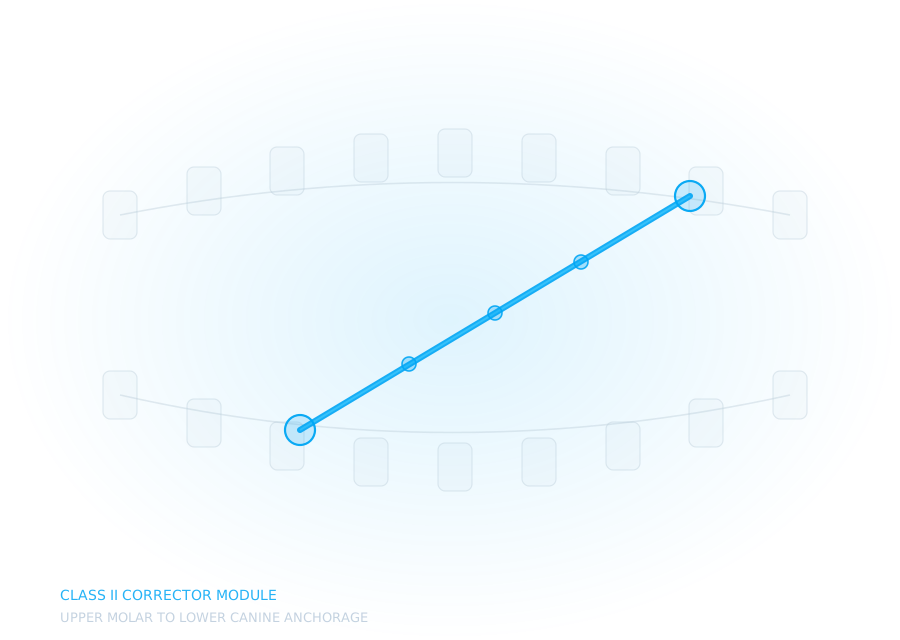
Class II MARA in a growing patient, mixed dentition

MARA in a growing patient, mixed dentition

Construction bite recorded at the chair; anchorage assessment flagged the lower incisors and a lingual arch was added before fitting. How we run this case type →

MARAAnchorage2 days
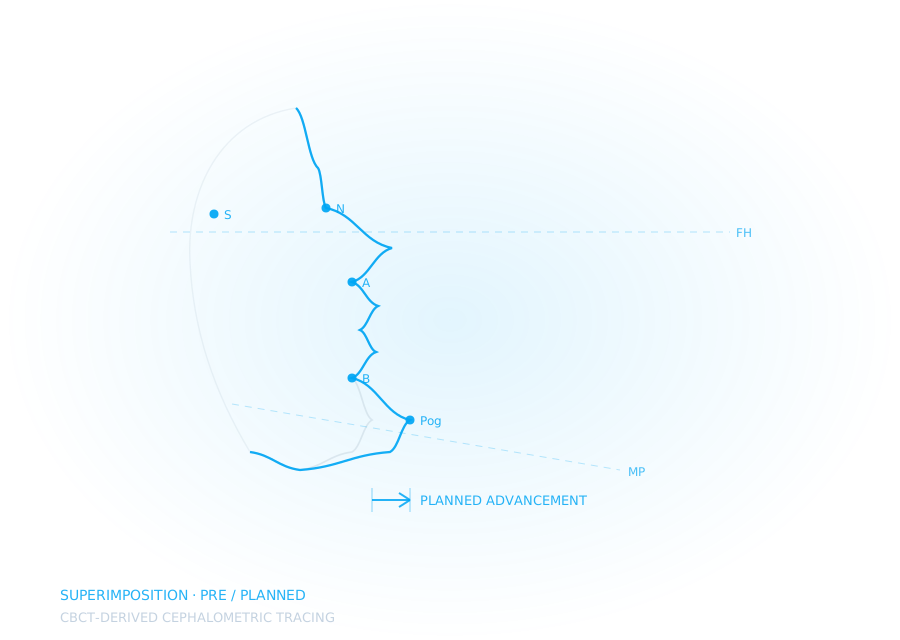
Diagnostics Planned versus achieved, one year post-surgery

Planned versus achieved, one year post-surgery

Superimposition of the surgical plan against the twelve-month record. Deviation reported landmark by landmark, with the registration method stated. How we run this case type →

SuperimpositionAudit1 day
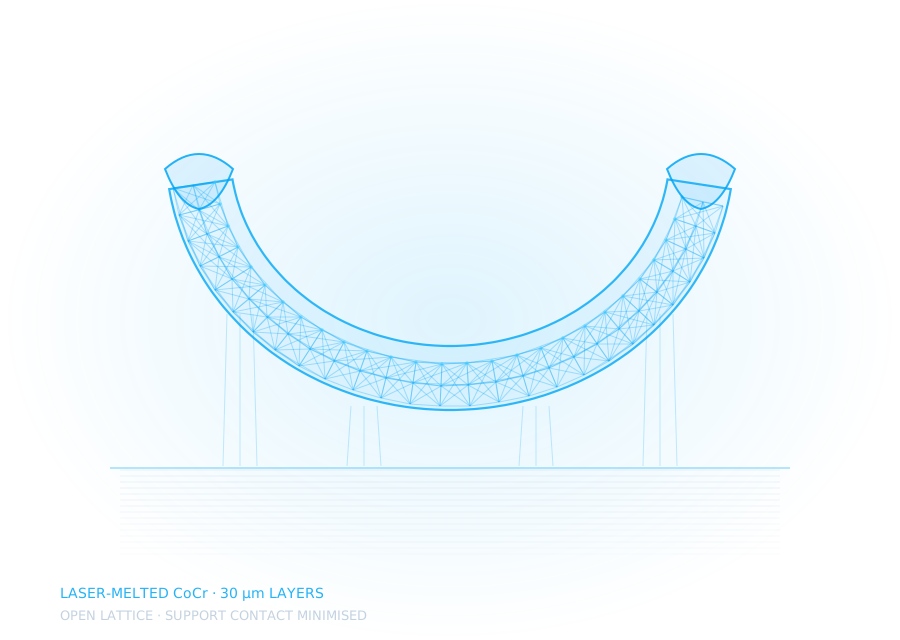
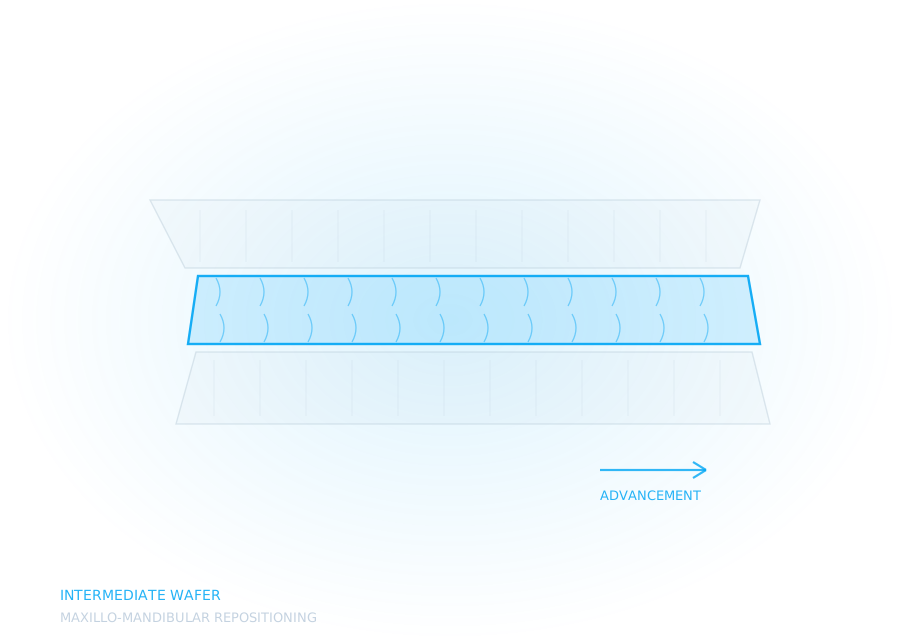
Metal One-piece laser-melted CoCr expander framework

One-piece CoCr expander framework

Replaced a soldered-band design that had fractured twice at the same junction. Printed as a single body, so there was no joint left to fail. How we run this case type →

CoCrLaser-melted3 days
Skeletal MARPE declined — bone would not support it

MARPE declined — bone would not support it

Planning showed cortical thickness below the threshold at every viable screw site. We said no and suggested a surgically assisted approach instead. How we run this case type →

MARPEDeclinedReferral
Diagnostics Scan rescue on an untrimmed palatal vault

Scan rescue on an untrimmed palatal vault

The original scan stopped at the gingival margin, so there was no vault to build a frame on. We specified the re-scan and the case ran clean. How we run this case type →

Scan reviewRe-scanSame day
Implant Guided implant plan with prosthetically-driven sleeve positions

Guided posterior implant, prosthetically driven

Bone-driven position would have put the screw access through the buccal cusp. Replanned from the restoration back; angle changed 14 degrees. How we run this case type →

exoplanFully guided2 days
Prosthetic Crown design with the margin line highlighted

Screw-retained molar on a titanium base

Emergence built from the healing abutment scan, with screw access rotated out of the central fossa before the design was approved. How we run this case type →

exocadTi-base2 days
Combined Smile design proportion study driving orthodontic space opening

Ortho then implants — planned as one case

Space opening at 12 and 22 set by the final restoration width, not by whatever the aligners happened to produce. The prosthesis drove the tooth movement. How we run this case type →

CombinedAligner + implant5 days
How we document

A case is not finished when the file ships.

An expander that looked perfect on screen and loosened at week three is a design that was wrong. We only learn that if someone writes down what happened in the mouth.

  • The objective — what movement was wanted, and the constraints around it
  • The design decisions — anchorage, screw position, indexing depth, staging order
  • What changed, every revision and who asked for it
  • Chairside reality — seating, fit, adjustment time, anything unexpected
  • The lesson — what we would do differently on the next one
Publishing cases

Consent comes first, always

Nothing goes into this library without documented patient consent for the images used, and identifying details are removed as a matter of course. Orthodontic records are unusually identifying, a profile photograph and a ceph together are close to a name. Treat them accordingly.

This is general guidance, not legal advice. Check your own regulator’s rules on advertising and patient imagery.

The entries above are worked examples showing how each case type is documented. Cases from clinical practice replace them as consent and records are confirmed.
Taking new cases

Want your case in here?

Send us something difficult. We will design it, document the reasoning, and you keep the write-up either way.