
What we need from you
Nothing unusual, but all of it, and correct:
- CBCT covering both jaws and both condyles. The condyles matter more than people expect — see below
- Intraoral scans of both arches, plus the bite. Full arches, not quadrants
- A bite record taken deliberately, with a note on how you took it and in what position
- Clinical photographs and a lateral ceph if you have one
- The objective, in a sentence. "Advance the maxilla 6 mm, autorotate, set the mandible to the new occlusion" is designable
Pseudonymise the DICOM where you can. A case reference is enough; we do not need a patient name to plan an osteotomy.
The order things happen in
1. Records review, same day
Before anything is designed we check the CBCT for motion artefact and field coverage, and the scans for the usual faults. If something will not support the plan you hear about it that day, not the day before surgery.
2. The planning session
A live call before any wafer exists. We go through the movement together — direction, magnitude, autorotation, the occlusal target, and whether the plan needs segmenting. This is not a formality. Three of the four reasons a wafer fails in theatre are decided in this conversation, not in the CAD file.
3. The plan, for approval
You get the planned movement with measurements, rendered so you can see it, before anything is built to it. Push back in plain language. Nothing proceeds until the movement is agreed, because everything downstream inherits it.
4. Design
Wafers and guides come out of the approved movement, not out of a second interpretation of it.
What leaves the lab
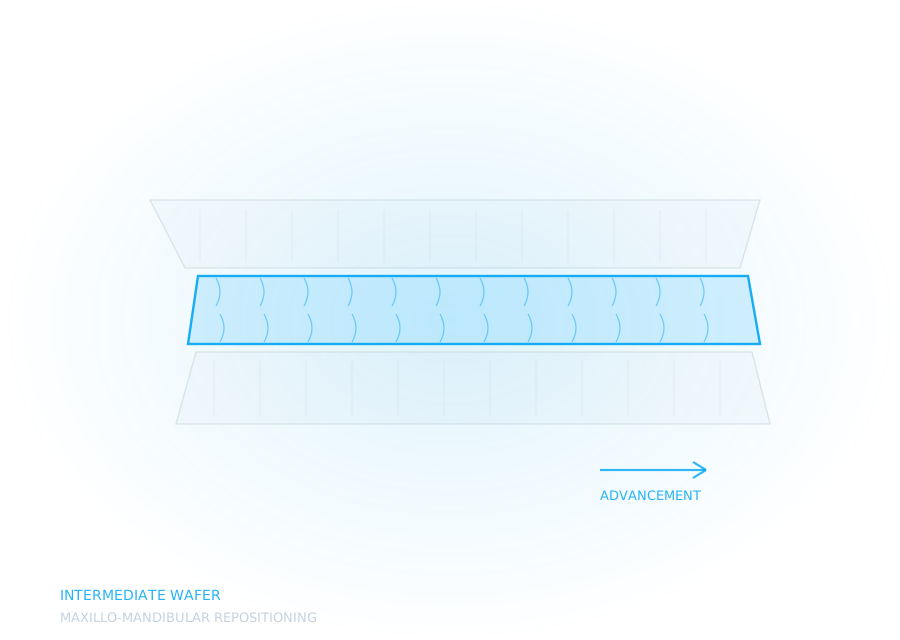
- Intermediate wafer — maxilla against the unoperated mandible
- Final wafer — the planned occlusion with both jaws moved
- Le Fort I cutting guide, with the osteotomy line and reference holes set before the cut
- BSSO cutting guides, medial and lateral, with split control
- Repositioning guides and plate-hole positions, so fixation lands where the plan expects
- Genioplasty guides where the case includes one
- A written record of what was measured, so if something does not seat you can work backwards instead of guessing
All print-ready. Nothing needs a welder.
Indexing, specifically
The most common single adjustment on a bimaxillary case is indexing depth. Deep enough that the wafer locates unambiguously; shallow enough that it seats over tissue which is not in its planned state, with drapes limiting access and swelling already starting.
We set it deliberately rather than accepting a default, and we will tell you what we chose and why. If you have a preference from previous cases, say so at the planning session and we will build to it.
Where these cases go wrong
Four things cause a wafer not to seat, and only one of them can still be fixed in theatre. The most dangerous is a bite recorded in a position the patient cannot reproduce under general anaesthesia — because the design is faithful to the record it was given, and cannot know the record was wrong.
We wrote that up properly: why your surgical wafer did not seat, including how the pattern of the misfit tells you which cause you are looking at.
Timeline
Four to seven working days from usable records, plus the planning session. Rush is three to four. If we are arranging production, add fabrication and shipping — you will get the real delivery date in the quote, not the design date.
Planning and design support only. Diagnosis, treatment planning and the surgical decision remain entirely with the treating clinician and surgeon.