
What we need from you
- Scan body in place, with a clean capture of it and the surrounding tissue
- A scan of the healing abutment or the emergence as it actually is. The soft tissue profile that has formed is real information and it is lost the moment the tissue collapses
- Opposing arch and bite
- The implant system, platform and Ti-base you are using, specifically
- Any preference on access position, and your cement gap if you have a validated one
Emergence
The tissue has already formed a profile around the healing abutment. That profile is the shape the patient's biology arrived at, and designing a crown that ignores it means the tissue has to be pushed somewhere else — which it will resist, blanch at, and sometimes recede from.
So the emergence is built from the scanned profile rather than from a library default. Where the existing profile is not what you want, that is a provisional-stage conversation, not something to fix by forcing it with the definitive crown.
Access position
The channel has to emerge somewhere. On a molar, the central fossa is both the most convenient place structurally and the worst place occlusally — it is where the opposing cusp wants to be.
Rotating the access away from the functional contact is straightforward at design stage and awkward later, because the occlusal surface has already been built around it. So it is decided and shown to you for approval before the design goes further.
Where the implant angulation does not allow enough rotation, the honest answer is an angled channel within the system's tolerance, or a cement-retained design, or a conversation about the fixture position. Not a crown with a hole through the working cusp.
Parameters worth agreeing
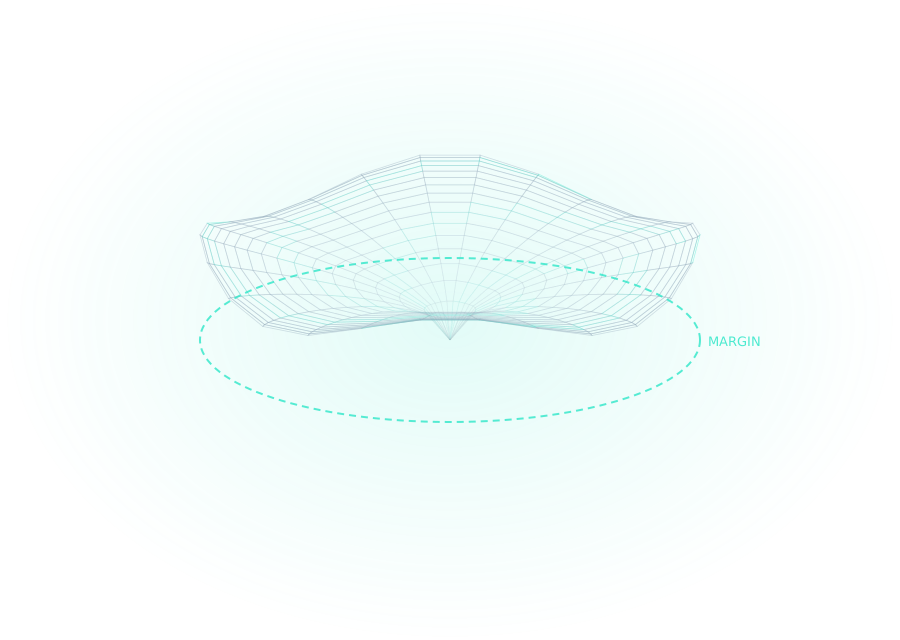
The defaults in any CAD package are a starting point, not a specification. Cement space, spacer extent and margin behaviour all interact with your cement, your Ti-base and your bonding protocol.
Published ranges give a sensible place to begin — commonly cited cement spaces sit in the tens of microns, with many systems defaulting around 40 µm — but the number that matters is the one validated in your hands with your materials. We will use yours if you have one, tell you what we used if you do not, and never quietly change it between cases.
We wrote up the parameter set properly: the exocad parameters worth checking before you accept the defaults.
What leaves the lab
- The crown design, with access position shown for approval before finalising
- Emergence profile derived from the scanned tissue
- The parameter set used, stated rather than assumed
- Contacts and occlusal scheme against the scanned opposing arch
- Production files, or the finished restoration where we are arranging it
Where these go wrong
- Access through the central fossa, discovered at try-in
- Library emergence forced onto tissue that formed a different shape
- Default cement space that has never been validated against the cement actually being used
- Scan body captured incompletely, so the platform position is approximate
Timeline
Two working days from usable records.
Planning and design support only. Diagnosis, treatment planning and the clinical decision remain entirely with the treating clinician.