
What we need from you
- Intraoral scans of both arches, plus the construction bite as a separate record
- A note on how the construction bite was taken — how far advanced, opened by how much, and in what position you asked the patient to hold
- Lateral ceph and photographs
- Growth status, and your assessment of where the patient sits on it
- Which teeth are deciduous, and your estimate of when they will go
The construction bite
This is the one part of the case that cannot be fixed later in CAD. The appliance will hold the mandible where the record put it, for the duration of treatment. If the record was taken too far forward, the patient wears that. If it was taken with insufficient vertical opening, the appliance is built into an interference.
We will ask how it was taken and we will say if something in the record does not look consistent with the scans. That is not second-guessing your clinical judgement; it is the one check that costs nothing and catches the error that costs most.
Anchorage, which is where these cases actually leak
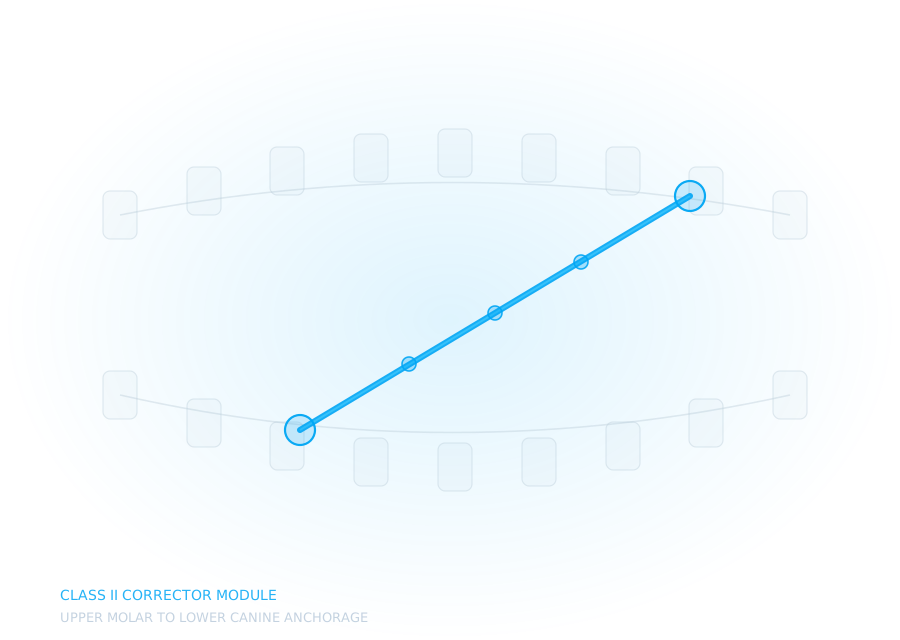
The reciprocal force of advancing the mandible lands on the lower dentition, and the classic outcome is lower incisor proclination — dental compensation absorbing correction that was meant to be skeletal. It is not a fault in the appliance. It is physics doing what physics does when nothing resists it.
So the anchorage assessment is part of the design, not an afterthought. Where the lower incisors look vulnerable — thin biotype, existing proclination, minimal bone labially — we will flag it and propose reinforcement. A lingual arch is the usual answer, fitted before the functional rather than added after the proclination appears.
You may disagree with the assessment. That is a reasonable conversation to have at the planning stage, with the measurements in front of both of us.
Mixed dentition, specifically
The abutments are going to change during treatment. Deciduous molars supporting the appliance will exfoliate on their own schedule, not yours. Where the design depends on a tooth with a limited future, we will say which tooth and what the plan is when it goes — because discovering it mid-treatment means an unplanned remake.
What leaves the lab
- Crown and attachment design fitted to the actual abutment anatomy
- Arm geometry and length, set from the construction bite
- The anchorage plan, with what it is protecting against
- A note on abutment longevity where deciduous teeth are load-bearing
- The advancement as recorded, stated in numbers, so it can be checked against what you intended
Where these cases go wrong
- A construction bite that does not reflect what was intended — and the appliance reproduces it faithfully
- Lower incisor proclination absorbing the correction, where anchorage was not reinforced
- An abutment exfoliating mid-treatment, forcing a remake
- Breakage at the arm, usually a geometry or material issue rather than patient abuse
On records generally: the record errors that cost the most.
Timeline
Two working days from usable records. Same-day review of the construction bite if you want the check before you commit to it.
Planning and design support only. Diagnosis, treatment planning and the clinical decision remain entirely with the treating clinician.