
What we need from you
- Scans of both arches and the bite record at the position you want the splint built to
- The vertical dimension you want, stated. Not implied by the bite record — stated, so it can be checked
- Which arch, and whether coverage is full or modified
- The objective. Pre-surgical stabilisation, diagnostic, parafunction management — these want different contact schemes
- Any teeth that must not be loaded, and anything mobile
The vertical is a decision, not a default
Every millimetre of opening changes the mandibular arc and therefore where the contacts land. A splint built at an unstated vertical is built at whatever the record happened to capture, which may or may not be what you intended.
So we ask for it explicitly and we build to it. If the record and the stated vertical disagree, you hear about it before the splint is printed rather than after it is in the patient's mouth.
Contacts
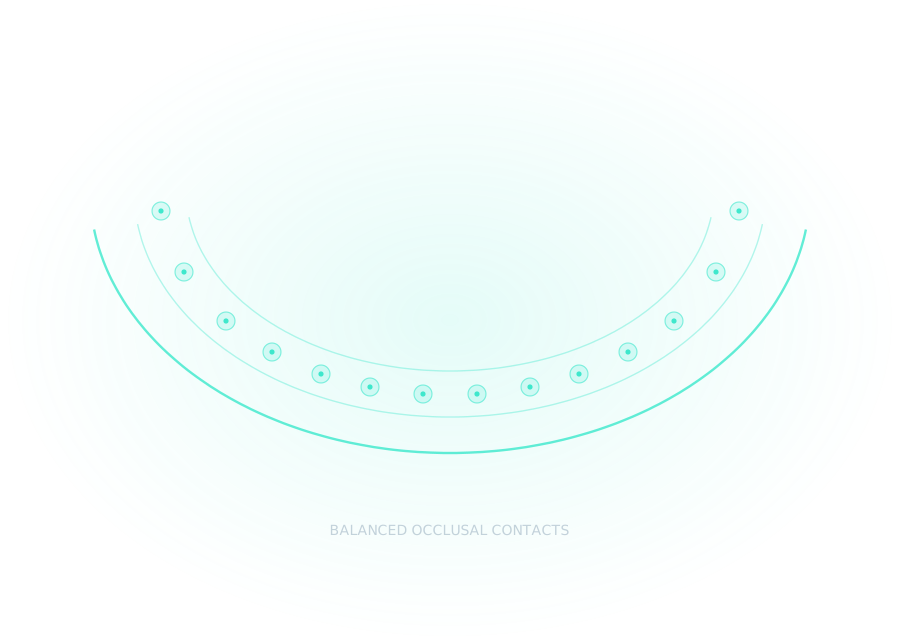
For a stabilisation splint the target is even simultaneous bilateral contact at the stated vertical, with the guidance scheme you specify. Getting there in CAD is straightforward. Getting there in the mouth depends on the fit of the intaglio surface and on the print being dimensionally faithful.
We design and verify the contact distribution digitally and report it, so you know what it should look like when you check it with articulating paper. A splint that arrives with no stated contact scheme leaves you doing that work from scratch at the chair.
Pre-surgical splints specifically
Where the splint is being worn before orthognathic planning, it is doing a diagnostic job as well as a therapeutic one — and the position it establishes may become the reference the surgical plan is built against.
Which makes the record taken at the end of the splint period important in a way a routine record is not. If that is the sequence, tell us, and we will flag what needs capturing when the splint comes out.
What leaves the lab
- The splint design at the stated vertical, with the contact scheme documented
- Intaglio surface with the relief and retention specified rather than defaulted
- Print orientation and support placement, kept off occlusal and fitting surfaces
- Print-ready files, or the printed splint in clear resin where we are producing it
Where these go wrong
- The vertical was never stated, so the splint is built to an assumption
- Uneven contacts, which turn a stabilisation appliance into an unplanned repositioning one
- Over-relieved intaglio, so it will not stay in, or under-relieved, so it will not go in
- Support marks on the occlusal surface, which have to be adjusted away and take the planned contacts with them
Timeline
Next working day for design from usable records.
Planning and design support only. Diagnosis, treatment planning and the clinical decision remain entirely with the treating clinician.