Why your surgical wafer did not seat
Four causes, ranked by how often we actually see them — and the one that is almost always the real culprit.
Things we learned the expensive way, written down so you do not have to. Mostly about the parts of digital dentistry nobody demonstrates at a trade show — orthodontic, surgical and restorative alike.
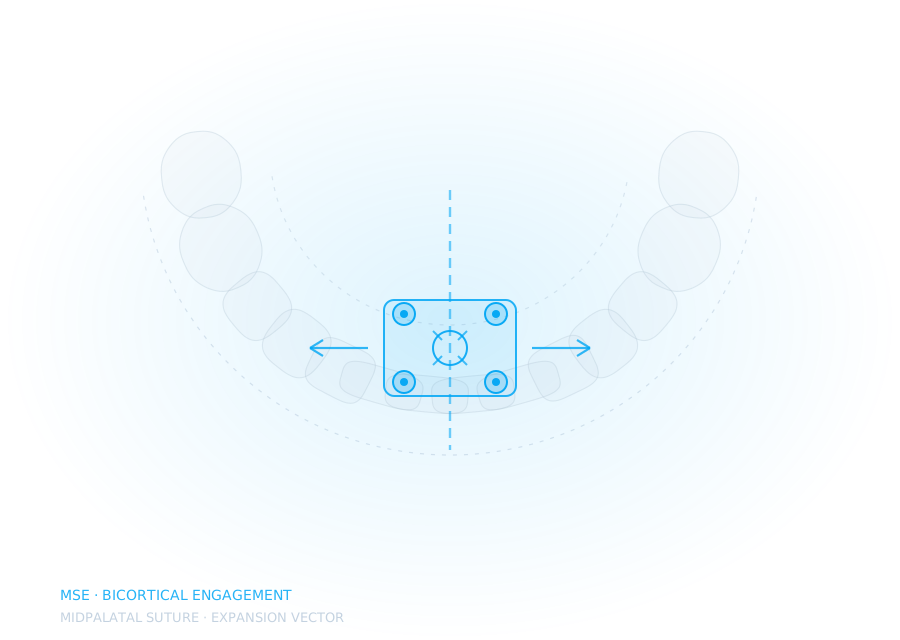
Software will happily place a miniscrew wherever you click. It will place one through a root, into a sinus, or into 0.9mm of cortical bone — and the render will look just as convincing as a good plan.
This piece walks through how we decide where a margin should be before we let anyone mark it, what to do when the scan genuinely does not contain the answer, and why “the software found it” is the most dangerous sentence in digital dentistry.
These are the pieces in the writing queue. Each one comes out of a case that went wrong, or a question we get asked often enough to be worth answering properly. Subscribe below and they land in your inbox as they are published.
Four causes, ranked by how often we actually see them — and the one that is almost always the real culprit.
Planning backwards from the restoration, and how to tell when a plan only pretends to.
A decision framework based on age, suture maturation and the bone actually present.
Cement gap, minimum thickness, connector cross-sections — where the defaults quietly cost you.
Movement order, anchorage, and why front-loading IPR quietly wrecks anchorage.
Trimmed palates, casual construction bites, cropped CBCT fields, motion artefact and the scan nobody checked.
Case breakdowns, workflow notes and the occasional admission that something did not work. No product pushes, and unsubscribing takes one click.
If a post raises a question about a case you have in front of you, send it over — we would rather look at the actual volume.