
Design Lab
Your outsourced CAD department. Treatment plans, prosthetics and appliances designed overnight.
- Crowns, bridges, screw-retained
- Surgical guides & full-arch
- Splints, aligner setups, models
A design lab, an academy and a consultancy for clinicians who would rather plan a case than guess at it.
Send an intraoral scan, a CBCT or a set of impressions. We register, align and clean the data before anyone touches a design.
Margins, emergence profile, path of insertion, occlusion, screw access. Every choice gets made on screen, before a bur touches enamel.
Design files back in 24–48 hours, print-ready and mill-ready, with the reasoning written down.
Most practices buy the scanner before they buy the workflow. We work the other way round — plan first, then design, then teach, then hand it over.
Your outsourced CAD department. Treatment plans, prosthetics and appliances designed overnight.
Cohort courses and one-to-one mentorship that teach the workflow, not just the buttons.
Vendor-neutral help choosing, installing and actually using a digital setup that pays for itself.
A case library, a working journal and a community of clinicians comparing notes in the open.
No black box. You see the plan before it becomes a file, and you can push back at any point.
Drop STL, PLY, OBJ or DICOM into a shared folder with a short prescription. No proprietary wrappers, no licence keys, no waiting for a rep to enable your account.
Distortion, missing margin, poor occlusal registration, an unscannable deep box — we flag it the same day and tell you exactly what to re-scan. A bad design almost always starts as a bad scan nobody questioned.
Anatomy is built for the patient's function and the space you actually have. Emergence profile, contact tightness, cusp inclines and screw-access position are all decisions we make deliberately and can explain.
A viewer link and annotated screenshots land in your inbox. Ask for changes in plain language — "more room distally", "flatter incisal edge" — and revisions are included, not billed.
Print-ready and mill-ready output with recommended material, parameters, supports and nesting. If you don't have production in-house, we point you to a lab that does.
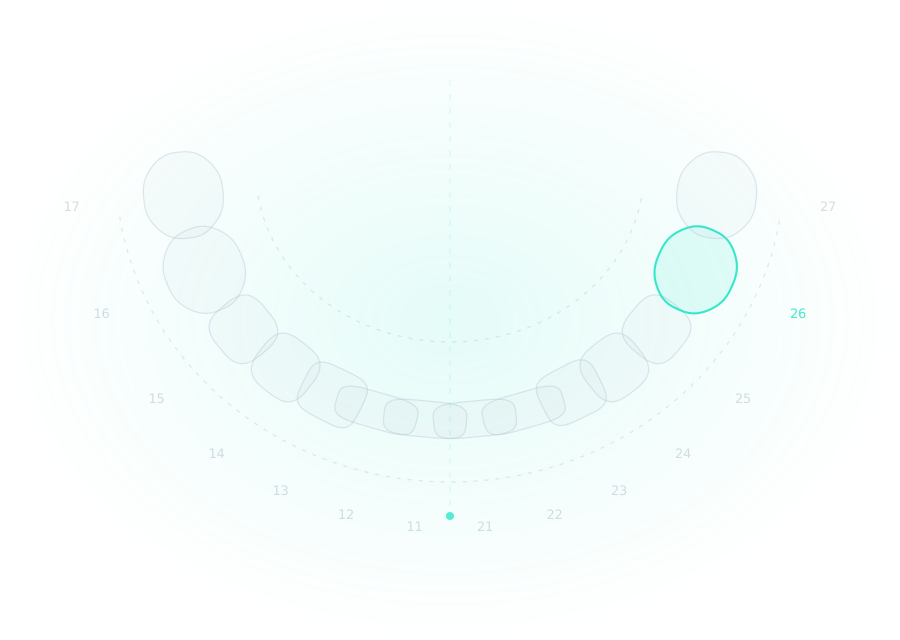
Send us the case you don't have three hours to design. We work as an extension of your practice or lab, on your naming conventions and your material preferences.
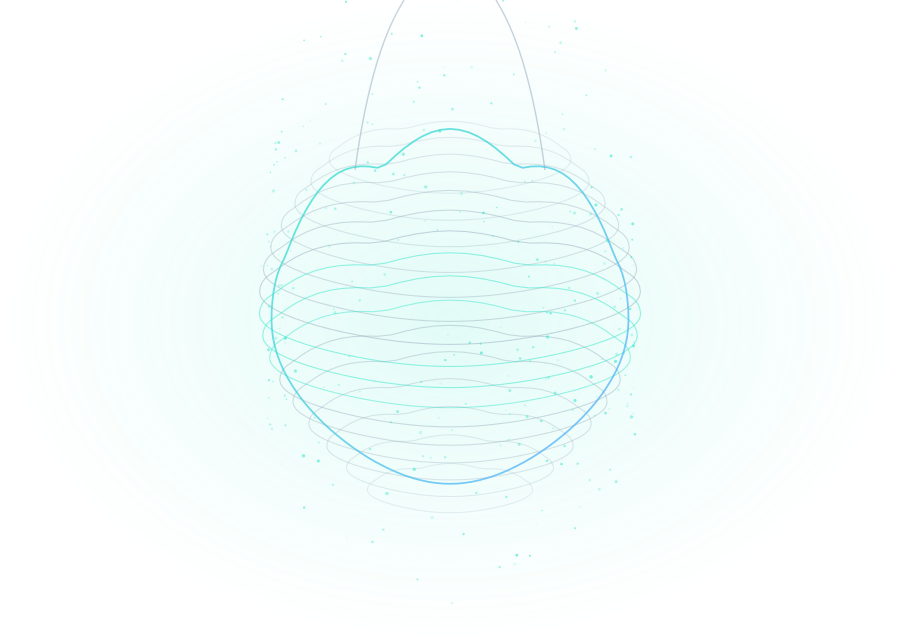
Anyone can show you where the buttons are. The hard part is knowing why a margin is where it is, when a guide will bind, and which cases you should still refer out.
Every case in the library documents what we planned, what changed at the chair, and what we would do differently.
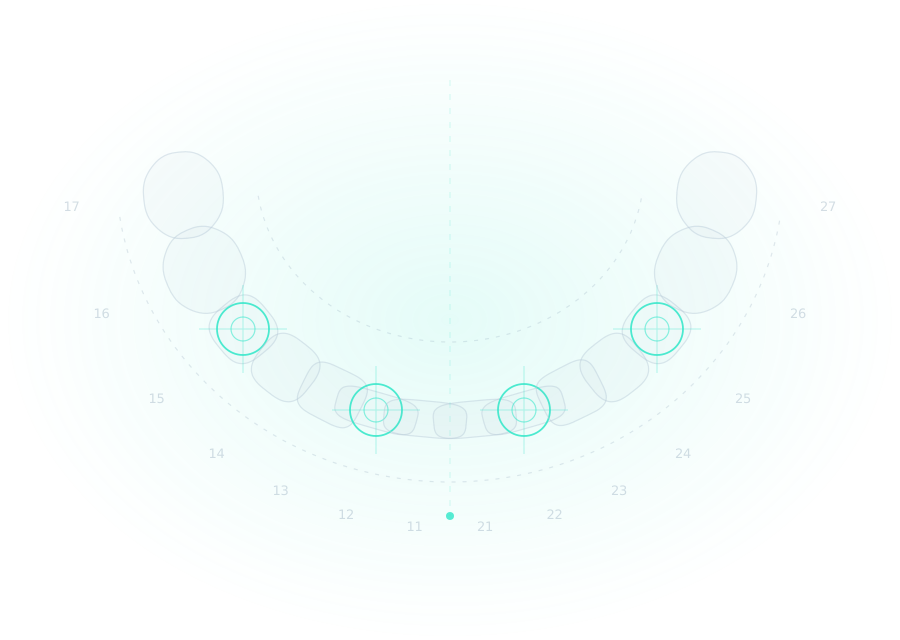
Guided placement with a conversion prosthesis designed and printed inside 48 hours of surgery.
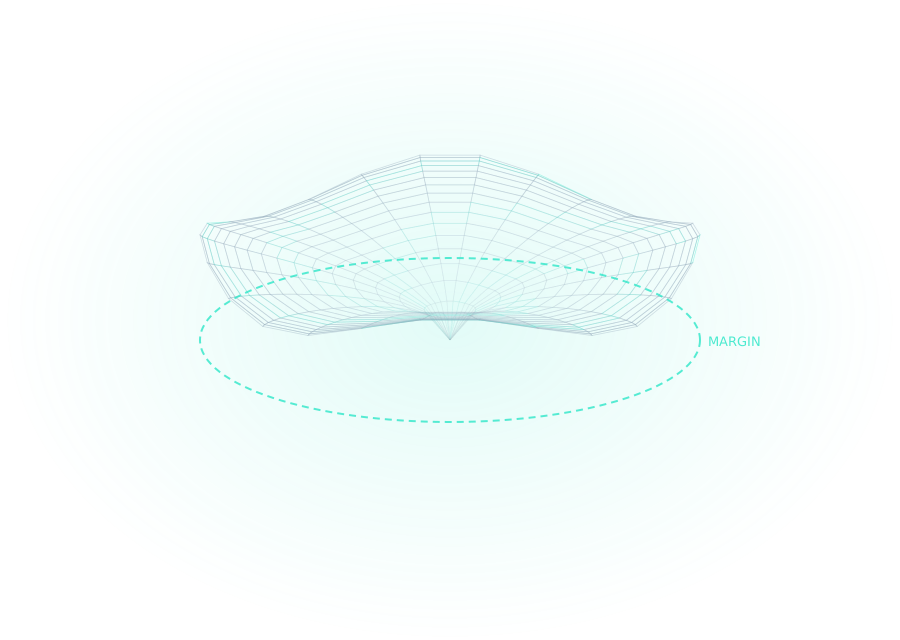
Scan to seat in one visit, with contact and occlusion set so the adjustment was a polish, not a rebuild.
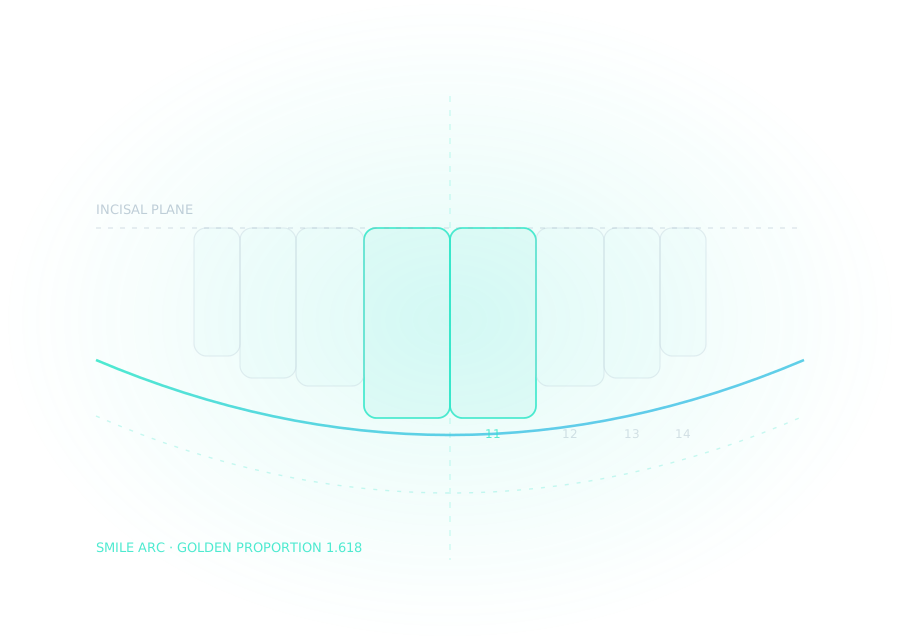
Digital wax-up driven by facial reference, printed as a trial the patient wore before anything was prepped.
“Digital dentistry stopped being about equipment a long time ago. The clinics that get results are the ones that decided what the case should look like before they started cutting. That decision is the product. Everything else is just a file format.”
If yours isn't here, send it over — we answer every message ourselves.
Ask a questionAn upper and lower scan plus a bite, in STL, PLY or OBJ. For implant work, add the DICOM from your CBCT and a scan of the scan-body position. Photographs help more than people expect — send them if you have them.
Single units and simple appliances are usually back the next working day. Guides and full-arch work run 48–72 hours because there is planning to agree first. If a case is urgent, say so when you upload it and we will tell you honestly whether we can hit your date.
If your system can export an open STL or PLY, yes. We are deliberately vendor-neutral — we would rather fit into the setup you already own than sell you a new one.
A named designer, working to a plan reviewed by a clinician. You will know who handled your case and you can talk to them directly about it.
That is the whole point of the academy and the consulting track. Plenty of clients start by outsourcing, then bring design in-house once their team is trained — and we would rather that than keep you dependent.
Both. Most people start with one case to see how we work. Monthly volume plans exist for practices sending regularly, and they are cheaper per unit — but nobody is locked in.
We will design it, walk you through every decision we made, and you decide whether we are worth keeping.